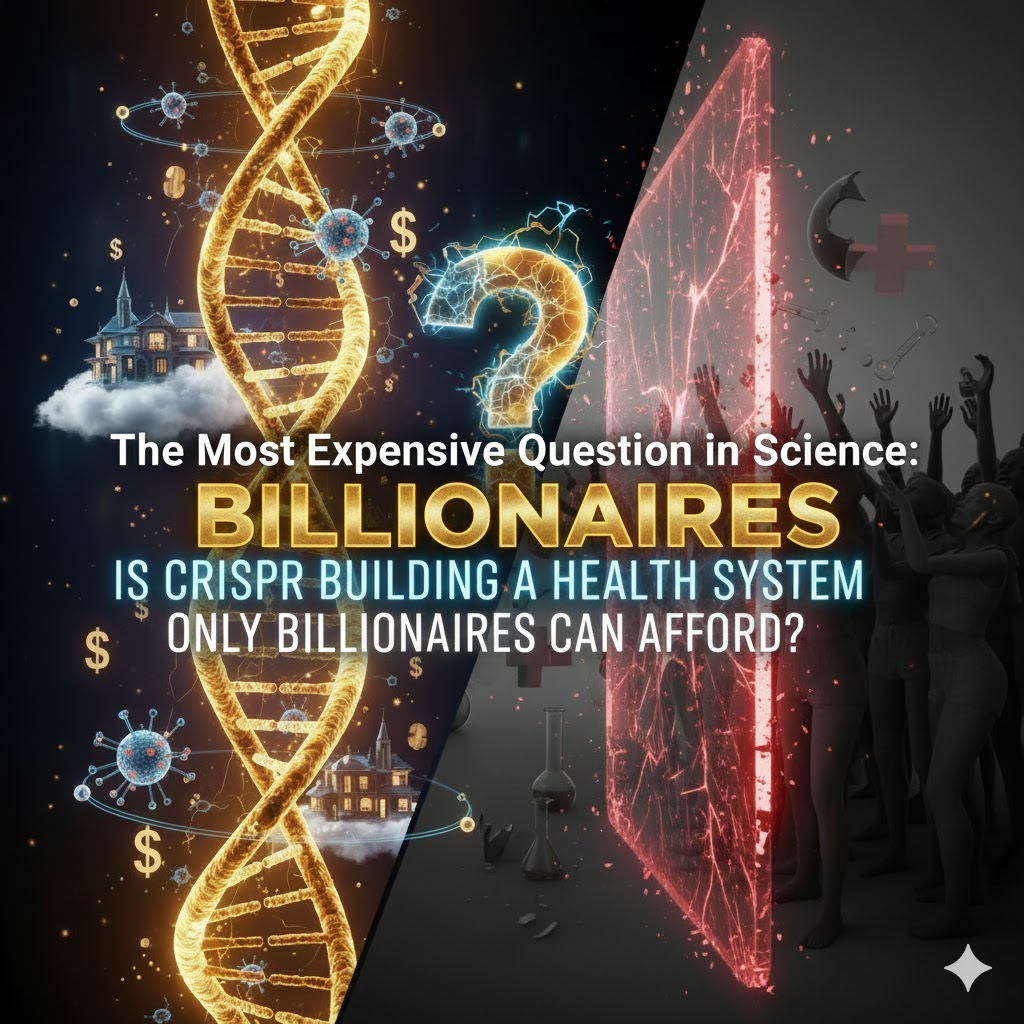
The scientific achievement is undeniable: we can now permanently cure debilitating genetic diseases with a single edit to the human genome. This is the miracle promised by CRISPR technology. Yet, as the first of these life-changing therapies hit the market, a chilling question arises, one that has nothing to do with molecular biology and everything to do with money. With treatments routinely priced above \$2 million per patient, are we quietly building a global health apartheid, where the privilege of a cure belongs only to the wealthiest individuals and nations? This is the fundamental ethical dilemma of the genome age, and it demands our immediate attention.
Understanding the Staggering Cost of a Genetic Cure
When we talk about gene editing therapies like Casgevy, which was the first FDA-approved CRISPR treatment for sickle cell disease, the sticker shock is immediate. Casgevy carries a launch price of \$2.2 million, while a similar competing therapy, Lyfgenia, is priced even higher at a staggering \$3.1 million (Source: BioPharma Dive, Dec 2023). It’s crucial to acknowledge the industry’s justification: these are one-time cures that replace the astronomical lifetime costs of chronic disease management, which often exceed \$4 million to \$6 million per patient over their lifespan. From a pure, long-term economic perspective, the cure could be considered cheaper. However, that logical calculation does little to help the patient today, who is faced with a \$2 million bill before the treatment even begins. This massive upfront cost acts as an insurmountable barrier, transforming a universal medical solution into a scarce luxury accessible only to a tiny fraction of the global population.

Gene Therapy Costs: A Snapshot of the Market
| Therapy (Example) | Target Condition | Launch Price (USD) |
|---|---|---|
| Lyfgenia (Bluebird bio) | Sickle Cell Disease | \$3.1 Million |
| Casgevy (Vertex/CRISPR Tx) | Sickle Cell Disease | \$2.2 Million |
| Zolgensma (Novartis) | Spinal Muscular Atrophy | \$2.1 Million |
The Global Injustice of Inaccessible Cures
The conversation about cost moves from an abstract financial problem to a profound global injustice when we consider who is affected by these target diseases. Take sickle cell disease, the very condition that Casgevy was designed to address. The condition affects around 400,000 newborns every year, but the overwhelming majority of those cases occur in low- and middle-income countries, particularly in sub-Saharan Africa (Source: ResearchGate, Oct 2024). The communities that bear the greatest human burden of this genetic illness are precisely the ones least likely to ever see, let alone afford, the cure. This ethical gap is further widened by factors beyond simple wealth. Delivering complex gene therapies is not as simple as taking a pill; it requires highly specialized medical infrastructure, sterile environments for drug preparation, and continuous, sophisticated long-term patient monitoring that simply doesn’t exist in many of the hardest-hit regions. If the cure is geographically restricted to Western hospitals, how can we truly claim global success?
The Human Duty to Engineer Accessibility
The challenge of ensuring equitable access is not just a moral ideal—it’s an economic imperative for global stability, a point stressed by major organizations like the World Health Organization (WHO) (Source: UN News, July 2021). If we don’t actively work to democratize access, we risk cementing health inequities that could persist for generations, deepening the very global disparity we claim technology is meant to solve. Addressing this requires thinking outside the traditional pharmaceutical business model. We need a fundamental shift toward valuing human life over immediate profit in this specific domain of one-time genetic cures. The most critical solutions will involve policy changes and international cooperation.
This is where the global community, led by governments and philanthropies, must step in:
- Establish Tiered Pricing Models: Pharmaceutical companies must be mandated or incentivized to offer drastically reduced or at-cost pricing for treatments sold to low- and middle-income countries (LMICs), recognizing the immense public health benefit.
- Fund Decentralized Manufacturing: Rather than relying solely on complex, remote Western facilities, we need global funding to build smaller, regional manufacturing sites in Africa and Asia capable of producing and safely delivering these specific therapies locally.
- Promote Open-Source Science: Encourage nonprofit bodies and research institutions to develop and license foundational CRISPR tools and protocols openly, allowing countries to bypass restrictive proprietary patents for local public health use.
Can Regulation and Ethics Catch Up to Genetic Innovation?
The current pace of genetic innovation is truly staggering, but the speed of ethical and regulatory oversight is lagging dangerously behind. Governments worldwide are wrestling with how to safely govern a technology that can literally alter the human germline. Organizations like the WHO’s Expert Advisory Committee have stepped forward to offer the first global recommendations for human genome editing, strongly arguing that this technology must be deployed for the benefit of all people, not just a privileged few. These global mandates urge national governments to prioritize building local regulatory capacity and establishing rigorous ethical oversight to prevent exploitation during clinical trials and ensure every person receiving treatment does so with informed consent, regardless of their economic standing. The technological race is exciting, but the regulatory catch-up is what will ultimately determine if CRISPR becomes an engine for global health equity or a symbol of extreme medical disparity.
Frequently Asked Questions (FAQs)
Q1: What is CRISPR, and why is it so expensive?
CRISPR (Clustered Regularly Interspaced Short Palindromic Repeats) is a revolutionary gene-editing tool that allows scientists to precisely edit parts of the genome by cutting out and replacing specific DNA sequences. The high cost is primarily due to the manufacturing complexity (creating the viral vectors that deliver the CRISPR tool into the cells), the novelty of the one-time, curative treatment model, and the massive R&D investment and risk assumed by pharmaceutical companies.
Q2: Are these high costs only an issue in developing countries?
No. While the lack of infrastructure makes the problem most severe in developing countries, the multi-million dollar price tag is a significant barrier even in wealthy nations. In the U.S. and Europe, these treatments often require lengthy negotiations with insurance companies or national health services to secure coverage, frequently excluding patients who lack specific insurance plans or live in systems with strict cost controls.
Q3: What is the ethical problem with genetic editing costing millions?
The core ethical problem is accessibility and fairness. If a treatment can cure a debilitating disease, limiting access to it based purely on wealth violates the fundamental principle of health equity. It means that the survival and quality of life for an individual become dependent on their economic status, rather than their medical need.
For More : ThinkBeyondDaily
Leave a Reply